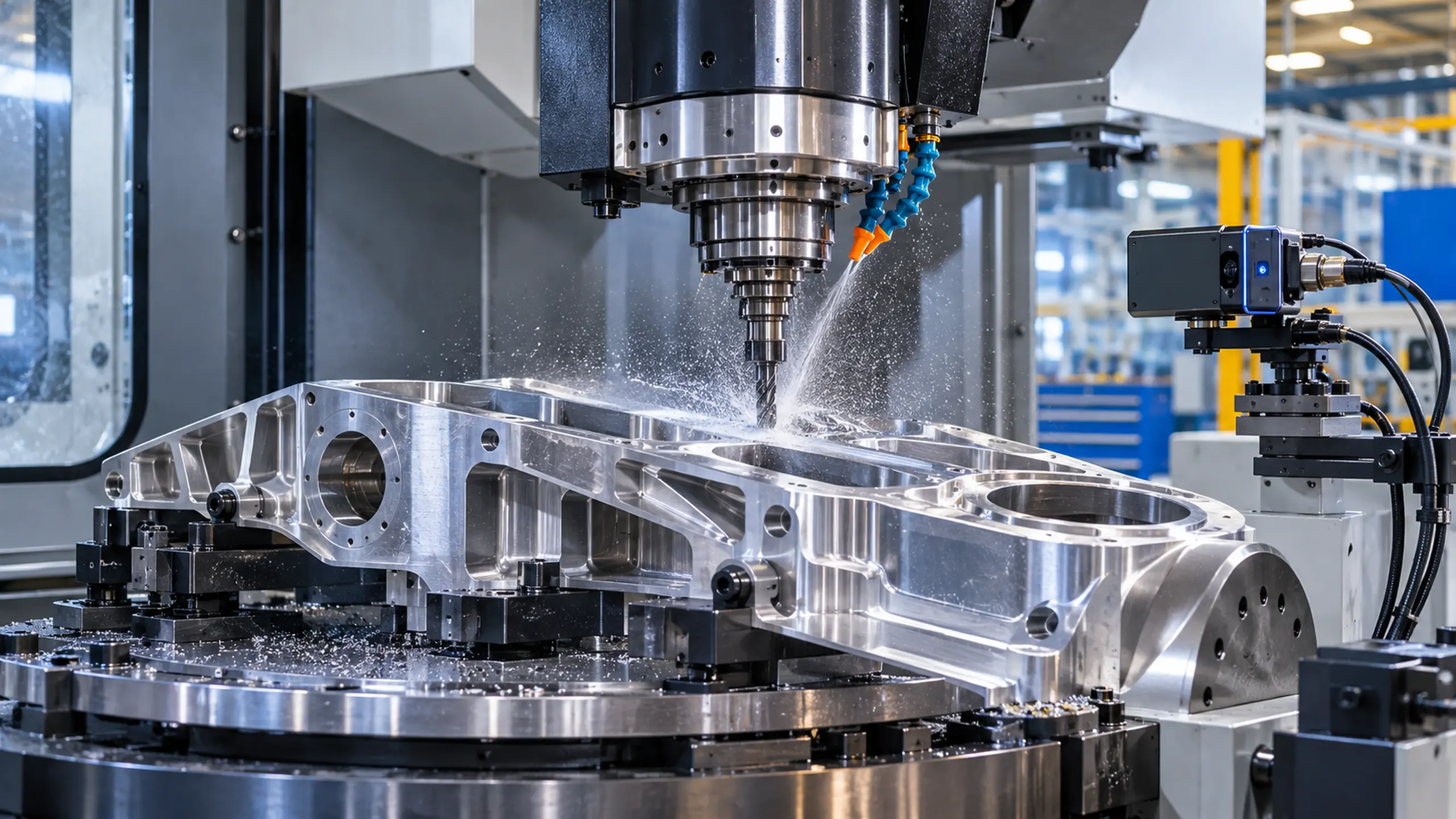
Physical AI and AIoT Applications for Precision Machining & Composites
Physical AI and Artificial Intelligence of Things (AIoT) applications connect manufacturing equipment, production data, and physical operations. In precision machining and composites, the value begins with a clear view of parts, tools, work in progress, and machine condition. That information can support quality review, maintenance prioritization, and carefully bounded equipment responses when the required interfaces and safeguards are in place.
Banner image: illustrative generated artwork, not a stock photograph.
Use-case starting points
Applications Across the Manufacturing Workflow
The following application areas are starting points for defining a use case. Select and refine each one around the actual equipment, process boundary, available data, and customer requirements.
01
Material, Part, and Tooling Traceability
Associate component, material, batch, or tool identity with production events and the relevant work order. Radio-frequency identification (RFID), Bluetooth Low Energy (BLE), or other identification methods may be evaluated according to the object, location, and shop-floor conditions. The workflow should account for missed reads, duplicate events, and incorrect associations.
Capture machine and process observations such as equipment condition and relevant operating measurements. Sensor placement, sampling, calibration, time alignment, and data quality determine whether the information is useful for condition review or maintenance prioritization.
Bring inspection observations and production context together for review. AI-supported analysis may help identify patterns or flag items for further inspection, but a finding must be evaluated against the applicable inspection method and acceptance criteria. A model output is not, by itself, a quality release.
Where a suitable control interface and approved operating boundary exist, a reviewed decision may lead to a bounded equipment adjustment or workflow request. The system must respect machine interlocks, operator authority, fault handling, and independent protective functions. Physical execution should be checked against observed equipment state.
A useful application definition starts with the equipment or asset, the production step, the person using the information, and the decision the workflow is intended to support. It should also state the available data, interfaces, environmental conditions, required response time, and measures used to evaluate the result. These details help determine whether an application belongs at the machine, at an edge device, or within connected manufacturing systems.
Evaluation measures should match the workflow. Examples include identity-association quality, event completeness, measurement availability, alert review time, inspection disposition, or confirmation that an authorized equipment response occurred. Set baselines and acceptance criteria before a pilot; do not assume a target or improvement without evidence.
Transparency
Implementation Status and Evidence
Illustrative or simulation-based examples must be labeled clearly and must not be presented as customer deployments.
Application examples on this page describe relevant use cases, not a claim that every function is currently implemented or deployed by Machentra.
Before publication of a specific scenario as a demonstration or customer result, confirm its implementation status and supporting evidence.
Further information
Related Resources
Start with your operating context
Discuss Your Application
Discuss your application to define the production workflow, required observations, integration boundaries, and evaluation criteria.